

February 24, 2026
Carbon-negative RNG has faced doubts over feedstock handling, feedstock supply security, and high costs. Vanguard Renewables’ secret recipe to address these is to blend highly CI-negative manure with fully scalable food waste.
In the United States, approximately 30-40% of the food supply is wasted each year, equating to nearly 60 million tons, or 120 billion pounds of food, valued at over $200 billion. Traditionally, this food ends up in landfills where its handling and compost is not only costly but also harmful to the environment. Yet, this virtually unlimited and broadly available feedstock also provides the greatest potential for low-carbon RNG.
Over the past five years, Renewable Natural Gas (RNG) has experienced growth at a pace of 18% CAGR, fueled by demands for drop-in decarbonization solutions in clean fuels, utility gas, and power generation. The main pathway to create RNG involves the anaerobic digestion of organic matter, primarily from general landfill waste, wastewater, animal manure, and food waste. Within these pathways, food waste yields the most affordable carbon-negative RNG – and is growing at a 66% CAGR over the past 5 years.
Once a niche technology, RNG has become one of the most sought-after energy sources to enable the transition to a low-carbon future. Yet, this growing attention has also brought heightened scrutiny on the way RNG producers handle feedstock, build reliable inflow of digestible matter, and create a pathway to scalability while lowering production costs.
National policy goals aim to halve U.S. food waste by 2030 (USDA/EPA), and several states have enacted organic waste bans (e.g., MA, CA), forcing food companies to work with waste offtakers that ensure nothing is landfilled. In this context, several RNG producers have offered to offtake food waste, but some have faced criticisms over their handling of feedstocks — such as failing to divert food waste from landfills or cutting corners in disposal methods, resulting in environmental harm and supplier exposure to backlashes.
Maintaining a steady flow of feedstock is another persistent challenge for carbon-negative RNG producers. Anaerobic digesters require a continuous and predictable feedstock inflow to operate efficiently. Because many U.S. farms are too small, they often cannot host digesters or generate sufficient volumes, resulting in periods when digesters lack the steady inflows to run at full capacity and maintain the anaerobic digestion in optimal conditions. Producers can try to aggregate manure from multiple farms to overcome this, but doing so requires additional transport and coordination, raising costs and complexity. These issues leave feedstock supply dispersed and irregular, limiting the number of feasible projects and preventing scalability.
Carbon-negative RNG has also traditionally been the most onerous due to structural barriers to efficiency and scalability. Production is capital-intensive, requiring large upfront investment in digesters, and operationally complex, with ongoing costs for feedstock collection and gas processing. Economies of scale are limited: fixed capital and O&M expenses do not scale down proportionally, and the feedstock logistics to supply larger digesters is very costly. As a result, farms with less than 1,000 cows cannot financially support a digester system. Together, these barriers keep per-unit production costs of manure RNG structurally high and reinforce the fundamental scalability challenges that constrain RNG’s growth.
With the increased adoption of RNG, the sophistication of producers has led to an offering that immediately addresses these concerns, leveraging the availability, low-cost, and high abatement potential of food waste to complement manure as a carbon-negative feedstock.
Blending food waste with manure in digesters creates a high demand for volumes of food waste, allowing a company like Vanguard Renewables to ensure collected volumes of foods are utilized, and stay true to the “zero-landfill” commitment. This provides an end-to-end waste management solution that makes it simple for manufacturers and retailers to responsibly manage all waste streams. The result is a true win–win: companies meet climate goals, farmers gain steady lease income, and environmental benefits are achieved. This has earned Vanguard some of the longest lasting trust-based relationships across the RNG industry.
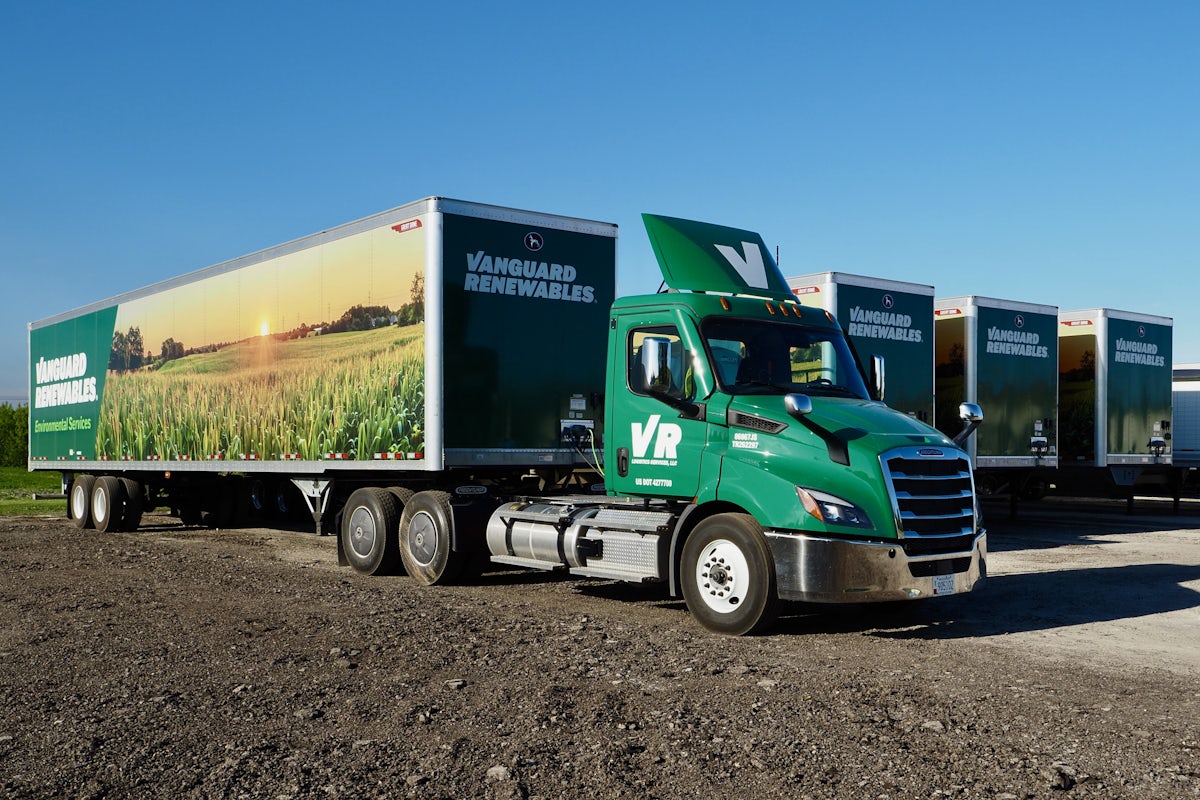
Vanguard’s decade-long track record with major food brands also enables a predictable and reliable feedstock inflow. Vanguard leverages a logistics network based on relationships with large food manufacturers to ensure that inedible food and beverage byproducts are consistently diverted from landfills and transformed into renewable energy and valuable farm resources. At the same time, Vanguard partners with local farms of varying sizes through agreements that can span over 20 years, generating a predictable feedstock supply while providing farmers with effective manure management solutions. Together, this nationwide network provides Vanguard with both the scale and stability needed to guarantee feedstock volume well into the future.
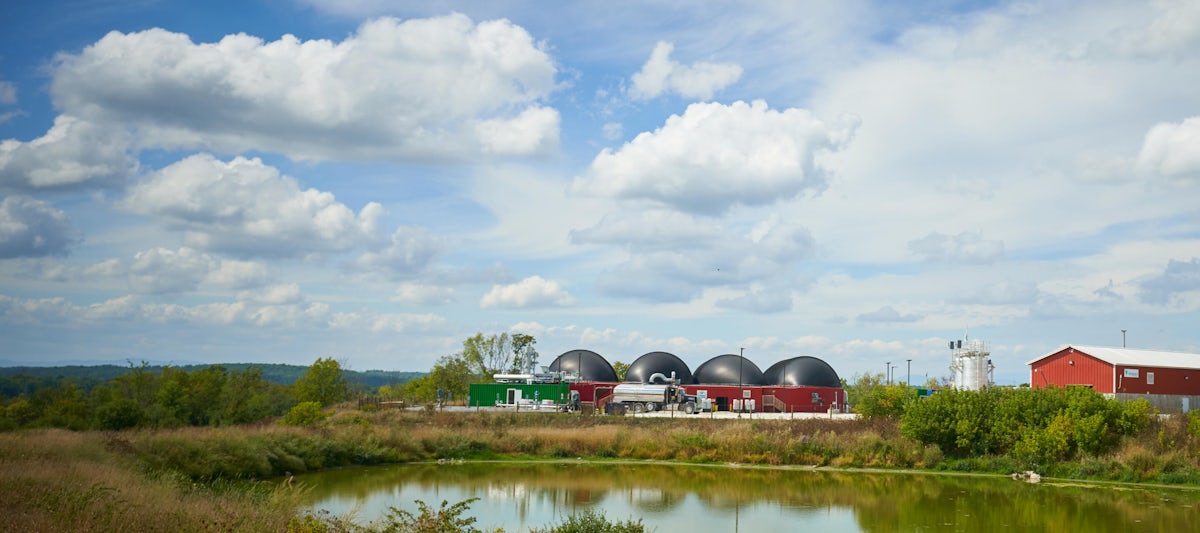
Vanguard’s operating model, feedstock blend, and technology allow for a fully-scalable and low-cost production. Firstly, by relying on an expansive network of predictable feedstock suppliers, and building farm-based anaerobic digesters, Vanguard ensures low logistical costs and highly optimized utilization of the digesters. Secondly, the finely calibrated co-digestion of manure with food waste harnesses both the environmental benefits of the former and the widespread availability of the latter, resulting in a fully scalable RNG with negative CI score. Thirdly, technological innovation, such as the ability to processes both packaged and unpackaged food waste, ensures operational flexibility, reduces handling needs, and ultimately curbs production costs.
Vanguard’s model ultimately creates a fully-scalable and sustainable path that advances the circular economy, strengthens partnerships with feedstock providers and family farms, and supports end-users with low CI-adjusted RNG costs. This model has scaled nationwide, supported by BlackRock, a joint venture with TotalEnergies, and a partnership with CMA-CGM. The combination of financial strength, technical expertise, and on-the-ground relationships positions Vanguard as the market leader in delivering reliable, affordable, carbon-negative RNG at scale: a solution that advances sustainability today, supports American farms and food companies, and future-proofs US energy supplies.